Selecting battery equipment for repeated commercial installations requires more than comparing advertised energy capacity. Electrical compatibility, thermal management, installation procedures, and maintenance support all influence equipment suitability.
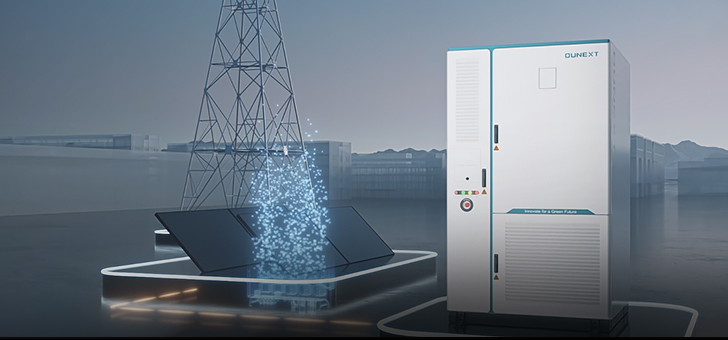
An integrated energy storage cabinet combines essential storage components within one engineered enclosure. This arrangement reduces the need to assemble separate battery and control systems onsite.
The term wholesale refers to the purchasing and distribution process rather than a different battery technology. Understanding both cabinet operation and procurement requirements helps installation partners maintain consistent technical standards.
What Is Inside an Integrated Storage Cabinet?
Commercial battery cabinets contain multiple components that perform distinct electrical and protective functions. Their coordinated design supports charging, discharging, monitoring, and equipment safety.
Battery Modules and Power Conversion
Battery cells are connected into modules and packs to achieve the required capacity and operating voltage.
A battery management system monitors important electrical and thermal conditions. Power conversion equipment regulates the transfer between battery direct current and the receiving electrical network.
The energy management system controls charging and discharging according to site requirements, while communication interfaces and metering equipment provide essential data for monitoring and maintenance.
Although integrated design improves coordination between these components, external switchgear, grounding, and electrical protection still require project-specific engineering.
Cooling and Protective Equipment
Battery cells generate heat during charging and discharging. Excessive temperatures or significant differences between cells can influence operating conditions and degradation.
Liquid cooling transfers heat through a circulation network designed to regulate battery temperatures.
Dunext’s PowerHill 233kWh incorporates liquid cooling with a specified system temperature difference below 2.5°C. Its protective architecture covers cell, module, electrical, fire suppression, structural, and cloud-monitoring layers.
These features support safety management without replacing installation-specific protective engineering.
Technicians still require suitable access for inspection, emergency response, and maintenance.
Which Specifications Should Be Checked Before Purchasing?
A product’s nominal energy capacity represents only one aspect of its performance. Power output, voltage, integration options, and environmental requirements determine whether the equipment matches the project.
Battery Capacity and Rated Power
A battery cabinet with a capacity of 233kWh can nominally store 233 kilowatt-hours of energy, but this does not mean it can continuously deliver 233kW of power. Energy capacity indicates how much electricity is stored, while output power determines how quickly that energy can be supplied.
PowerHill 233kWh has a rated charging and discharging power of 105kW. Although its 0.5C classification describes the relationship between charging or discharging rate and battery capacity, the manufacturer’s 105kW rating is used for equipment selection.
Actual discharge duration also depends on conversion losses, battery operating limits, and the selected control strategy.
Voltage and Renewable Energy Integration
A wholesale energy storage cabinet is compatible with the site’s electrical infrastructure. PowerHill supports rated grid voltage configurations of 220/380V and 230/400V, along with AC-coupled inverter arrangements and DC-coupled photovoltaic integration.
Installers should verify the specific configuration for each project, especially when connecting the cabinet to an existing solar installation. Protection coordination, communication interfaces, inverter compatibility, and installation clearances also require careful evaluation to ensure reliable system integration.
How Can Wholesale Procurement Reduce Project Risks?
Repeated procurement creates opportunities to standardize technical documentation, configuration checks, and maintenance procedures. However, individual installations still require site-specific assessment.
Technical Procurement Checklist
Before confirming equipment orders, project teams should verify:
- Exact product configuration: Model, battery capacity, and rated power.
- Electrical compatibility: Voltage, coupling method, and communication interfaces.
- Installation requirements: Cabinet dimensions, foundations, and external protection.
- Service arrangements: Warranty conditions, technical assistance, and component replacement.
These checks establish a consistent reference for purchasing and commissioning. They also reduce the risk of ordering equipment with unsuitable optional configurations or incorrectly interpreting a product-family name.
A clear technical specification helps distributors compare equipment without relying exclusively on promotional descriptions.
Installation and Logistics Considerations
Cabinet dimensions and weight directly affect transportation, lifting arrangements, and installation planning. PowerHill 233kWh measures 1,390 × 2,380 × 1,350mm, but these dimensions represent only the enclosure, not the complete installation footprint.
Contractors also assess site accessibility, equipment handling requirements, and available space before delivery. These preparations help ensure smooth transportation and equipment positioning while reducing unexpected installation challenges.
Additional space is required for foundations, cable routing, electrical clearances, and maintenance access. Although the cabinet’s integrated design reduces onsite assembly, external wiring, protective testing, and commissioning remain necessary.
Proper installation planning helps prevent interference with surrounding equipment and ensures safe access for routine inspections. Adequate maintenance clearance also makes troubleshooting and component replacement more manageable throughout the system’s service life.
Reliable after-sales support is equally important for wholesale energy storage cabinet procurement. Technical training, installation documentation, and access to replacement components help contractors maintain consistent service quality across multiple project locations.
Clear maintenance procedures and responsive technical assistance support efficient troubleshooting and long-term equipment management. These arrangements also help installation teams address operational issues and coordinate maintenance activities more effectively.
Sourcing and Deploying Integrated Storage Cabinets
An integrated battery cabinet combines energy storage, conversion, cooling, monitoring, and protection within one coordinated enclosure.
Successful wholesale procurement requires accurate specifications, compatible electrical connections, and clear maintenance responsibilities.
Dunext offers PowerHill 233kWh with 105kW rated charging and discharging power. Standardized technical evaluation supports consistent project delivery while preserving necessary site-specific engineering checks.
