Industrial automation depends on more than motors, controllers, and sophisticated software. Behind many automated operations are compact control components that manage switching, signaling, timing, and motor protection. Although these devices may receive less attention than larger industrial electrical equipment, their performance can directly affect system stability, maintenance requirements, and operational continuity.
For engineers, system integrators, equipment manufacturers, and electrical distributors, selecting the right electrical control products requires more than comparing specifications. The control method, load characteristics, installation environment, protection requirements, and compatibility between components all need to be considered.
Why Control Devices Matter in Automated Systems
An automated electrical system typically separates control circuits from power circuits. This allows lower-power signals to operate equipment that may handle significantly higher currents. Control devices form the connection between these two parts of the system.
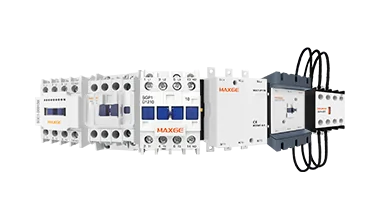
A control contactor, for example, uses electromagnetic operation to connect or disconnect a main circuit while being controlled through a separate coil circuit. This arrangement allows motors and other loads to be switched remotely and repeatedly. According to MAXGE’s product information, AC contactors are designed for electromagnetic switching of motors and loads and are suitable for industrial automation applications.
Other components serve different functions. A thermal relay can monitor motor current and respond to sustained overload conditions, while switches, push buttons, indicators, limit switches, proximity switches, and time relays support operation, signaling, positioning, and sequential control.
When these components are correctly coordinated, the control system can perform its intended sequence while providing appropriate protection for connected equipment.
Choosing the Right Electrical Control Products
The first consideration should be the actual application rather than the product name alone. Motor rating, operating voltage, current, switching frequency, control voltage, installation conditions, and required protection should all be evaluated before selecting components.
For motor applications, a contactor and overload protection device may need to work together. The contactor handles routine switching, while a thermal relay helps respond to prolonged overload conditions. For other applications, additional devices may be required for timing, position detection, manual operation, or status indication.
Compatibility is equally important. Components should be selected as part of a coordinated control circuit instead of being treated as independent products. Electrical ratings, terminal arrangements, accessories, mounting methods, and control characteristics can all affect installation and maintenance.
This approach is particularly important when electrical control products are integrated into production machinery or larger industrial electrical equipment. A component that meets an individual specification may still be unsuitable if it does not work properly with the surrounding control system.
Understanding the Role of a Relay Electrical Device
A relay electrical device is commonly used to control one circuit through another circuit. Depending on its design and application, a relay can provide signal switching, isolation, timing, or control functions.
In an automated system, relays can help translate signals between different parts of the control architecture. Time relays, for instance, introduce adjustable delays that can support sequential operations and interlocking functions. This becomes useful when equipment must start, stop, or respond according to a defined sequence rather than simultaneously.
The selection process should consider the required contact configuration, rated current and voltage, coil or control voltage, switching frequency, timing requirements, and environmental conditions. Understanding these parameters helps reduce compatibility problems during commissioning and future maintenance.
What to Consider When Selecting a Control Contactor
A control contactor should be matched to the load it will operate. Important factors include the rated operational current, utilization category, operating voltage, coil voltage, switching frequency, and motor characteristics.
The application environment also deserves attention. Dust, temperature, humidity, vibration, and enclosure conditions can influence long-term equipment performance. For systems that operate frequently, the expected switching cycle should also be considered when evaluating the suitability of a contactor.
Accessories can further extend the functionality of a control circuit. MAXGE offers AC contactor accessories designed for functions such as auxiliary signal feedback, time-delay control, and coil-related applications.
Building a More Maintainable Control System
Reliability is not determined by one component. It depends on how the complete control circuit is designed and how individual devices work together.
Clear circuit documentation, appropriate component labeling, accessible installation, and consistent product selection can simplify troubleshooting. Standardizing compatible electrical control products across similar machines can also make spare-parts management easier and reduce unnecessary maintenance complexity.
For equipment manufacturers and system designers, product documentation is another important consideration. Technical catalogs, certification information, installation instructions, and product specifications can help engineers verify whether a component fits the intended application before procurement.
MAXGE provides a dedicated industrial control products catalog covering its industrial product range, including AC contactors and related control equipment.
Finding Suitable Components for Industrial Applications
As automation systems become more integrated, control components continue to play an important role in reliable equipment operation. Selecting a contactor, relay, protection device, or switching component should therefore be based on the complete application rather than on isolated specifications.
MAXGE offers an industrial device portfolio covering AC contactors, thermal relays, motor starting control units, motor protection circuit breakers, control switches, signal components, time relays, fuse bases, and related products.
When project requirements involve specific electrical ratings, operating conditions, product combinations, or technical documentation, direct communication can make the selection process more efficient. To discuss product specifications and application requirements, you can contact MAXGE through the official contact page.
Supporting Reliable Automation Through Better Control
The devices inside an automation cabinet may be small, but their functions are fundamental to switching, protection, signaling, and sequence control. From a contactor that controls motor operation to relay devices used for signal or timing functions, each component contributes to how an automated system operates. The selection process should therefore consider not only individual device ratings, but also how control, protection, and switching functions work together within the cabinet.
A practical selection process should consider load characteristics, electrical ratings, environmental conditions, compatibility, protection, and long-term maintenance. For equipment manufacturers and industrial users, matching these requirements with the actual control architecture can help simplify integration and support more consistent operation across different automation applications.
MAXGE develops low-voltage electrical solutions for industrial control and protection, with applications covering motor control, power distribution, intelligent electrical management, and other industrial equipment needs. Its smart manufacturing capabilities and automated production processes support the development and manufacture of electrical control products, while its broader low-voltage portfolio allows different protection and control functions to be considered together within an industrial electrical system.
