Selecting a metal 3D printing service for industrial parts involves more than finding a supplier with suitable equipment. Component geometry, material requirements, finishing operations, inspection standards, and repeat-order needs all affect the final result. A service that works well for a simple bracket may not be appropriate for a mold insert with internal channels or a component with precision mating surfaces.
For manufacturers evaluating metal additive manufacturing solutions, selective laser melting (SLM) offers a way to produce complex metal geometries directly from digital models. The value of the service depends on how well the provider connects design review, printing, post-processing, and quality control to the part’s intended application.
Choose Services According to Part Complexity
Different industrial parts require different levels of engineering support. A straightforward bracket may need file verification, printing, and dimensional inspection. A component with thin walls, intricate features, or internal passages may require a more detailed design review before production.
For parts with complex internal channels, manufacturers should ask how the provider will assess build orientation, support structures, and powder removal. Internal passages must be designed so that residual powder can be removed through accessible openings and suitable cleaning procedures. If the geometry makes cleaning difficult, the team may need to revise the design before printing.
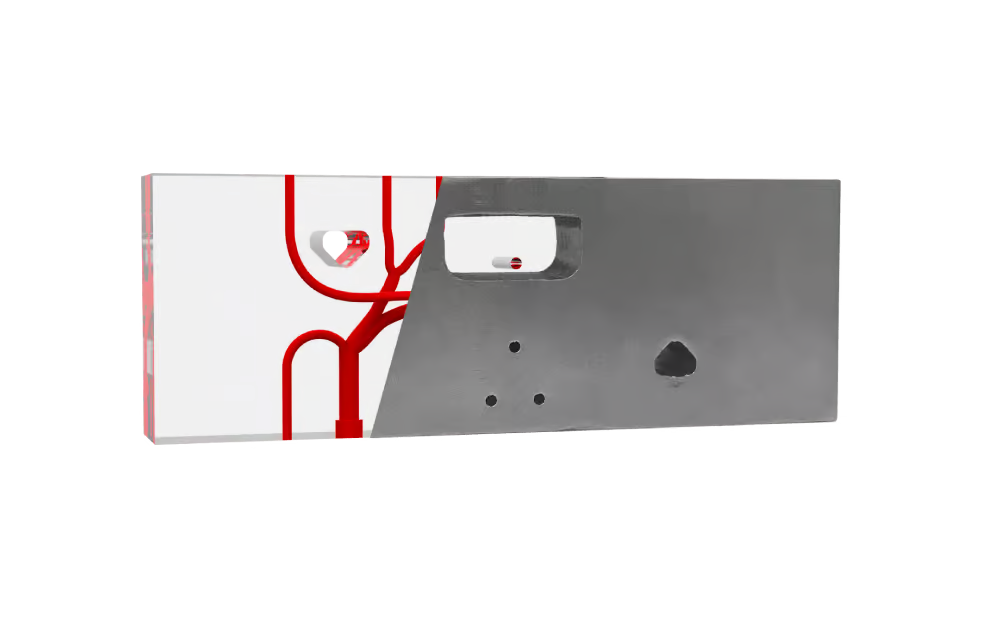
Conformal cooling channels in mold inserts can follow cavity shapes more closely than conventional drilled passages. However, their geometry, accessibility, surface condition, and inspection requirements must be evaluated before printing.
LiMN 3D offers metal printing services and design-for-additive-manufacturing support. Its service workflow includes file checks, printing recommendations, post-processing, and quality inspection, which are relevant when manufacturers need assistance evaluating complex designs.
Match Materials and Finishing to Functional Requirements
Material selection should begin with the part’s operating conditions. Load, temperature, corrosion exposure, wear, and weight restrictions can influence the appropriate alloy. Manufacturers should confirm that the service provider can process the required material and supply the documentation needed for the application.
The printed condition may not meet every functional requirement. Components with precision mating surfaces, bearing interfaces, sealing faces, or specified surface finishes may need machining or additional finishing after printing. The service quotation should identify which surfaces will be finished and which dimensional requirements apply after all operations are complete.
Buyers should also distinguish between printed dimensions and final accepted dimensions. Heat treatment, support removal, and machining can affect the finished component and its inspection requirements. For critical features, engineering teams should agree on measurement methods and acceptance criteria before production begins.
When evaluating additive manufacturing metal 3D printing, manufacturers should ask which operations are included in the quoted service. A low printing price may not reflect the full cost if machining, surface treatment, or inspection must be arranged separately.
Choose a Service That Can Support Repeat Orders
A successful prototype does not automatically establish a repeatable production process. Recurring industrial orders require consistent material selection, controlled build preparation, documented process conditions, and inspection records. These controls help manufacturers identify the cause of deviations and compare results between production runs.
Version control is particularly important when designs change. Each job should reference an approved drawing or CAD revision so that operators do not manufacture from an outdated file. The production record should connect that revision to the material, build identifier, finishing operations, and inspection results.
Batch planning affects SLM production efficiency. Parts using the same powder alloy can share a build, while different alloys generally require separate builds and controlled material changeovers. Proper powder handling and machine cleaning are essential to prevent cross-contamination and maintain part quality.
For mixed batches of compatible parts, the service provider should plan part identification before printing. Labels, build maps, or other controlled records can help distinguish components after removal from the build plate. This is especially useful when parts have similar shapes but different drawing revisions or inspection requirements.
Measure Effective Output and Total Service Cost
The number of parts printed in one build is not the same as the number delivered and accepted. Manufacturers should account for build preparation, printing, cooling, part removal, finishing, inspection, and any rework when estimating delivery capacity.
Calculate effective delivery output by dividing the number of accepted parts by the complete cycle time. Define the cycle consistently, from preparation through final inspection, so quotations for additive manufacturing metal 3D printing can be compared on the same basis.
The same approach can help compare service quotations. Buyers should examine the expected accepted quantity, total turnaround time, material charges, post-processing costs, inspection fees, and delivery arrangements. For recurring orders, they should also ask how the provider plans capacity and handles changes in demand.
A representative trial batch can reveal practical constraints before a larger order is placed. It allows both parties to evaluate the finishing route, verify inspection procedures, and establish realistic expectations for repeat production.
Review the Complete Service Workflow
A suitable industrial metal 3D printing service connects engineering review with manufacturing and final acceptance. LiMN 3D provides metal printing services, material options, post-processing, and quality-control steps for industrial applications. Manufacturers can discuss part geometry, material requirements, finishing needs, and production quantities before committing to an order.
Manufacturers can review LiMN 3D‘s equipment and service information, then discuss a representative part and its acceptance requirements. The proposed scope should state which finishing operations, inspections, and production records are included.
For complex internal features, precision interfaces, and repeat orders, service quality depends on more than printing capability. Clear design review, controlled material handling, appropriate finishing, and traceable inspection records help turn a digital design into a dependable industrial component.
