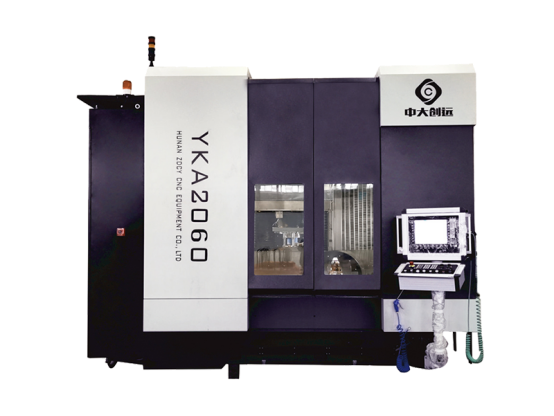
Final inspection of precision gears is a critical step in ensuring that finished components meet design specifications and perform reliably in real applications. When production involves a bevel gear grinding machine, the quality of bevel gear grinding directly affects the consistency of inspection results. Manufacturers must therefore focus on process stability and key quality indicators before parts reach the final inspection stage.
Dimensional Stability After Grinding
One of the first factors to confirm is dimensional stability after grinding and heat treatment. Residual stress can cause slight deformation in gear geometry, especially in tooth thickness and face alignment. When using a bevel gear grinding machine, manufacturers should ensure that the gear has fully stabilized before inspection. Any variation in mounting distance or reference surfaces can lead to inaccurate measurement outcomes, even if machining was precise.
Surface Condition and Tooth Contact Quality
Surface finish plays a major role in gear durability and noise performance. During bevel gear grinding, the surface should remain smooth and free from burns, chatter marks, or irregular contact patterns. A consistent finish helps ensure proper meshing during operation. Manufacturers should also verify tooth contact patterns before final inspection to confirm load distribution and alignment accuracy.
Datum Accuracy and Measurement Consistency
Accurate inspection depends on correct datum alignment. All measurement references, including shaft centerlines and mounting surfaces, must match those used during machining. If different setups are used between grinding and inspection, results may not reflect actual machining quality. Consistency in datum control ensures that the output of a bevel gear grinding machine is evaluated correctly and fairly.
Process Control and Heat Treatment Influence
Before final inspection, manufacturers should also evaluate process stability throughout machining and heat treatment stages. Variations in hardness, case depth, or grinding parameters can affect final gear performance. Proper monitoring during bevel gear grinding helps reduce deviations and ensures that inspection results are within predictable ranges.
Final Quality Verification
A stable production process reduces the risk of defects appearing at the inspection stage. When all key factors such as geometry, surface integrity, datum alignment, and material condition are controlled, final inspection becomes a confirmation step rather than a corrective one. ZDCY supports this approach by providing reliable gear grinding solutions designed to maintain consistency in precision manufacturing, helping manufacturers achieve stable quality outcomes across every production batch.
