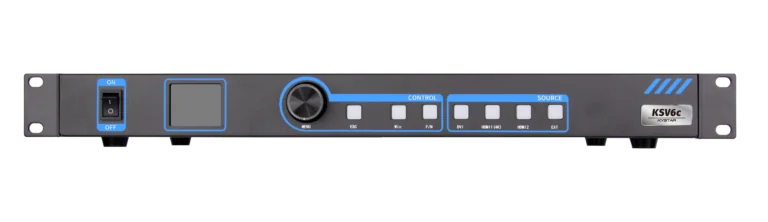
An LED display system requires more than LED modules and cabinets to deliver high-quality visual performance. Between the content source and the final screen output, a series of control devices work together to process, manage, and transmit image data. Among these components, the video processor plays a central role in ensuring that video content appears clear, accurate, and synchronized.
Many customers focus on LED screen specifications such as pixel pitch, brightness, and size, but the processing equipment behind the display is equally important. A powerful processor determines how effectively the system handles different input sources, resolutions, layouts, and real-time content changes.
For applications including stage performances, commercial LED walls, conference displays, and immersive visual environments, selecting the right processing solution can significantly improve the overall display experience. Kystar develops professional LED control products that integrate video processing and display management functions for various LED applications.
Understanding the Role of a Video Processor in an LED Display System
A video processor is a device that receives video signals from different sources, processes the image information, and prepares the content for LED display output. It acts as the control center between external video equipment and the LED screen.
Unlike traditional displays that can directly receive standard video signals, LED displays require specialized processing because they are built from many individual modules and cabinets. The processor helps convert input signals into a format suitable for LED control while maintaining image quality and synchronization.
In a typical LED installation, video sources may include computers, cameras, media servers, or broadcasting systems. The processor manages these signals and adjusts them according to the requirements of the LED screen, allowing content to be displayed correctly across the entire surface.
Kystar’s two-in-one processor solutions combine video processing functions with LED sending capabilities, helping simplify system configuration and improve control efficiency for LED projects.
How Does a Video Processor Improve LED Image Quality?
One of the most important functions of a video processor is improving the quality of incoming video signals before they appear on the LED screen.
Different content sources may have different resolutions, formats, or aspect ratios. Without proper processing, images may appear stretched, unclear, or incorrectly positioned. The processor analyzes the input signal and adjusts it to match the LED display’s resolution and configuration.
For example, a stage LED wall may receive content from cameras, playback systems, and live production equipment at the same time. The processor helps ensure that these different sources are displayed smoothly without affecting the visual quality.
Advanced processors can also provide functions such as scaling, signal switching, image adjustment, and multi-window management. These features allow operators to create flexible screen layouts based on different event or installation requirements.
Kystar’s KLSxC series video controllers support multiple input interfaces, multi-layer layouts, and flexible image management, helping users handle complex LED display scenarios with greater efficiency.
Managing Multiple Video Sources for Professional Applications
Modern LED projects often require more than one content source. A single display may need to show live video, presentation materials, advertisements, data information, and background graphics at the same time.
A professional video processor allows operators to manage these different signals more efficiently. Instead of switching between separate devices, users can organize multiple inputs and arrange them according to the needs of the application.
This capability is especially valuable in environments such as control rooms, conference halls, and live events. For example, a conference LED display may need to combine presentation content, remote video calls, and branding elements within one visual space.
In entertainment applications, operators may need to switch between camera feeds, pre-produced videos, and special effects instantly. The processor provides the flexibility required for smooth transitions and professional presentations.
Kystar’s integrated video controllers support multiple independent screens and flexible layer management, allowing users to control different content sources more effectively in complex LED systems.
Why Is a Video Processor Important for Large LED Displays?
Large LED displays create higher demands for signal processing because they contain significantly more pixels than standard screens.
As screen size increases, the amount of image data that needs to be processed also increases. Without suitable processing equipment, problems such as image delay, unstable output, or inconsistent display performance may occur.
A reliable processor helps maintain accurate image transmission across large LED surfaces. It ensures that different sections of the display remain synchronized and that viewers experience a seamless image.
This is particularly important for stadium displays, stage backgrounds, outdoor advertising screens, and immersive installations where visual interruptions can negatively affect the audience experience.
Kystar’s two-in-one LED processors are designed for professional display environments and provide integrated processing and sending functions, reducing system complexity while supporting large LED screen applications.
The Advantage of Integrated Video Processing Solutions
Traditional LED systems may require separate devices for video processing and signal sending. While this approach can work, it may increase installation complexity and require more equipment coordination.
An integrated solution combines multiple functions into one device. This design can simplify system setup, reduce the number of hardware components, and make operation more convenient.
For small and medium LED projects, integrated processors can provide an efficient solution by combining video processing, sending functions, and basic playback capabilities. For larger projects, professional processors with advanced control features can provide stronger performance and scalability.
Kystar’s integrated LED controllers combine video processing and sending card functions, helping simplify LED solution configuration and on-site debugging for different project types.
How to Choose the Right Video Processor for an LED Display?
Choosing a suitable processor requires consideration of the entire LED project rather than only the display size.
The first factor is input requirements. Projects with multiple cameras, computers, or media sources need a processor that can support different signal formats and switching methods.
The second factor is screen resolution. Larger LED displays require higher processing capacity to maintain smooth image output.
The third factor is application environment. A retail advertising screen may require simple and stable operation, while a stage production or XR environment may need advanced functions such as multi-layer control and real-time adjustment.
By evaluating these factors, customers can select a processor that matches their operational needs and provides better long-term value.
A Video Processor Is the Control Center of an LED Display
A video processor is one of the most important components in an LED display system because it manages signal conversion, image optimization, and content control.
From improving image quality to handling multiple sources and supporting large-scale displays, the processor ensures that LED systems deliver reliable and professional visual performance.
For projects ranging from commercial displays to complex entertainment environments, choosing the right processing solution helps achieve smoother operation, better image consistency, and greater flexibility.
With professional LED control technologies and integrated processing solutions, Kystar helps customers build efficient and high-performance LED display systems for a wide range of visual applications.
