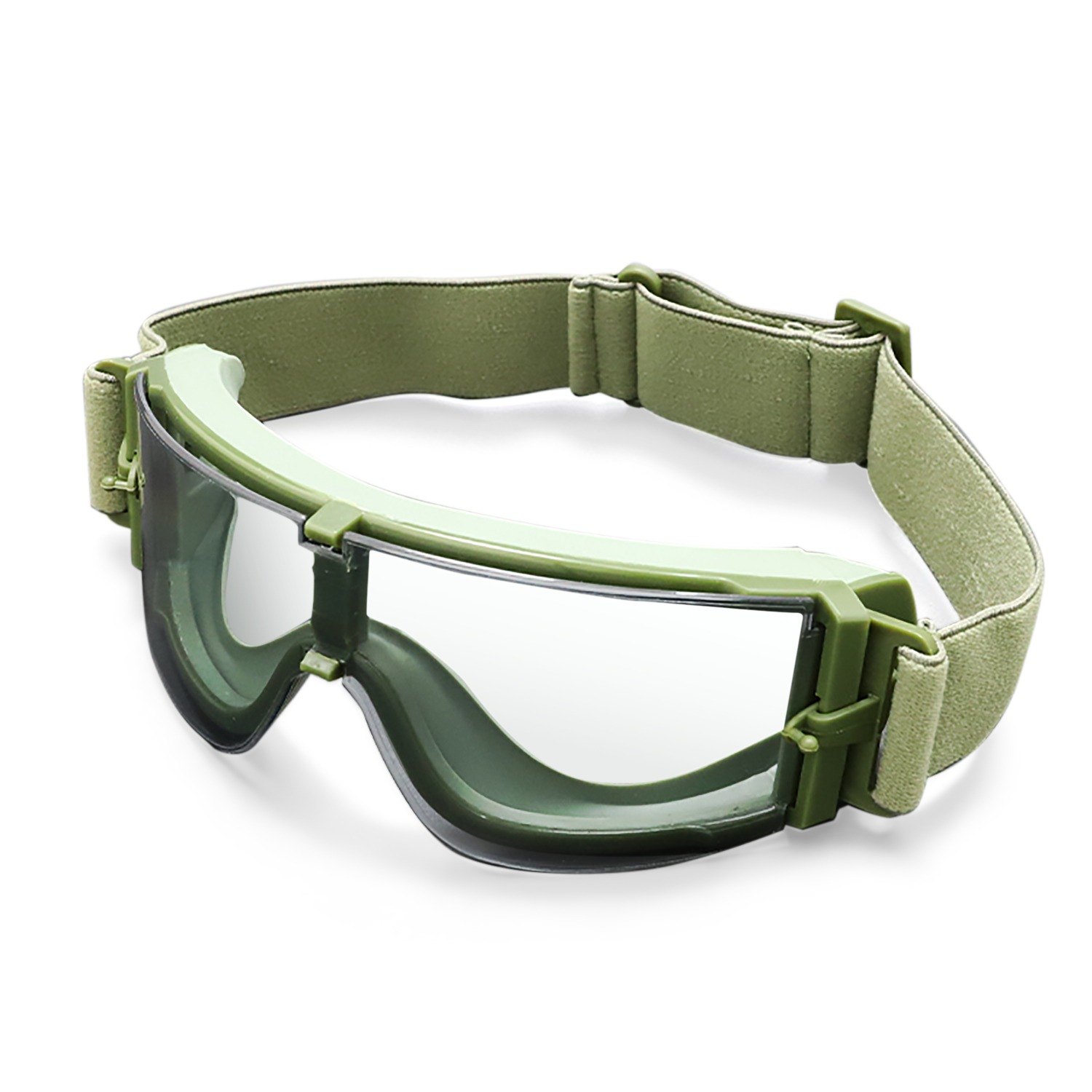
Airsoft-focused goggles and broader tactical goggles can share similar designs, but their intended applications and documented protection features may differ. Airsoft eyewear is commonly associated with recreational games and training environments, while tactical models can be developed for broader outdoor, shooting, or military-related applications. For buyers, the distinction becomes clearer when lens construction, protection features, fit, and stated certifications are reviewed alongside the intended use.
Application Sets the Starting Point
The intended environment influences which product characteristics receive the most attention. Tactical airsoft goggles may need to balance impact-related performance, anti-fog features, comfort, and ease of use during active play. Tactical eyewear for shooting or field applications may involve additional requirements related to protection, equipment compatibility, or recognized standards.
The official YIJIA Optical range includes both general tactical models and products specifically presented as tactical airsoft goggles. RK17, for example, is marketed as a tactical airsoft goggle model and lists an impact-resistant lens, anti-fog functionality, a thermoplastic polyurethane (TPU) frame, and polycarbonate (PC) lenses. The product page also lists CE certification and a MIL certificate.
This shows that “airsoft” does not necessarily describe a basic construction. A product in that category can still incorporate specific lens and frame features intended for an active outdoor environment.
Lens Material Provides an Important Reference Point
Lens material is an early technical detail buyers can compare. Polycarbonate appears across several models in the tactical range, while frame materials vary between TPU, thermoplastic rubber (TPR), and other configurations.
RK5 uses a reinforced high-definition PC lens and a TPR + PC frame. Its product page lists UV400 protection, anti-fog and anti-scratch functions, high-definition vision, and impact-resistant performance. It also identifies protection-related standards including ANSI Z87.1, EN166, and MIL-PRF-32432A.
For a buyer evaluating tactical goggles, these details provide more useful information than appearance alone. Material, lens functions, and certification references can be recorded directly on a sourcing specification sheet and checked during product evaluation.
Anti-Fog Performance Has a Practical Purpose
Fogging can become an issue when the temperature around the wearer changes or during sustained physical activity. This is why anti-fog functionality appears on both airsoft and tactical models in the product range.
RK17 lists anti-fog performance as one of its lens features, while RK5 specifies an anti-fog coating together with a ventilation system. The two models therefore approach the same visibility concern within different product configurations.
For buyers developing anti-fog tactical goggles, it is useful to examine how the feature is described at model level. Anti-fog functionality is one part of the optical design and should be considered alongside lens material, ventilation, fit, and the conditions in which the eyewear will be used.
Frame Design Affects How the Goggle Is Used
The frame contributes to fit, stability, and compatibility with surrounding equipment. A product intended for active movement needs a construction that remains positioned on the face, while helmet compatibility can be relevant for some tactical applications.
RK5 is described with an ergonomic frame structure and helmet compatibility. Its available colors are military green, black, and khaki, providing options suited to different product positioning. RK17 uses a TPU frame and is presented as tactical airsoft goggles.
For wholesalers and brands, frame construction can also influence customization decisions. Changes to materials, colors, ventilation structures, or other components may affect tooling and sampling requirements, so these details are worth defining before a customized order is developed.
Certifications Add More Context
Certification references become particularly useful when buyers are reviewing protective eyewear for a specific market. RK5 lists ANSI Z87.1, EN166, and MIL-PRF-32432A, giving purchasers several named standards to investigate against their own market or application requirements.
However, certification references should be interpreted according to the exact model and intended application. A standard listed on one product page should not automatically be assigned to every product in a supplier’s catalog. Model-specific documentation provides a clearer basis for procurement and compliance discussions.
Choosing Between Airsoft and Tactical Configurations
A commercial buyer can begin by defining the use case, then identify the required lens material, impact-related performance, anti-fog features, UV protection, frame material, fit requirements, certifications, and customization needs. This creates a more structured comparison between models.
The tactical collection from YIJIA Optical includes products with different combinations of these characteristics. RK5 focuses on a specification set that includes several named standards and protection-related lens functions, while RK17 is specifically positioned toward airsoft and lists its own combination of impact resistance, anti-fog functionality, and materials.
The company also supports original equipment manufacturer (OEM) and original design manufacturer (ODM) projects for tactical eyewear. Its official product information describes customization for lenses, frames, straps, logos, packaging, and functional structures. This can give brands a route from an existing product platform toward a more tailored configuration.
A Practical Comparison for B2B Buyers
For tactical airsoft goggles, buyers can focus on the playing environment, impact-related features, anti-fog performance, fit, and customization scope. For broader tactical applications, the assessment can additionally include named standards, helmet compatibility, frame construction, and specific protection requirements.
YIJIA Optical provides several tactical eyewear configurations that allow buyers to compare these characteristics at model level. A useful approach is to match documented features with the application and market requirements rather than treating “airsoft” or “tactical” as a complete performance category.
The distinction is therefore based on application and specification rather than the name attached to a product. Reviewing lens material, anti-fog functions, impact-related performance, frame design, certifications, and customization requirements gives brands and distributors a clearer basis for selecting the appropriate eyewear configuration.
