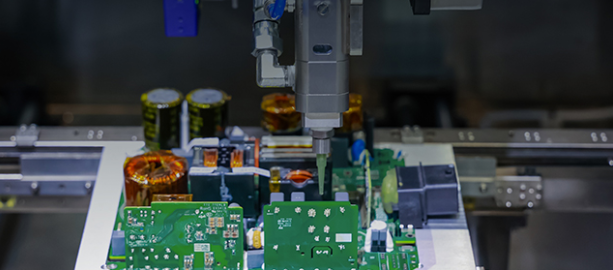
Accurate dispensing paths depend on the relationship between machine movement, fluid behavior, component geometry, and process settings. Even small deviations can cause adhesive to miss a bonding area, spread beyond its intended boundary, or create inconsistent coverage across repeated assemblies.
Properly configured automotive fluid dispensing equipment can help maintain controlled material placement, while Axxonauto provides automated dispensing technology relevant to industrial production environments where path precision affects product quality.
How Does Machine Geometry and Motion Calibration Affect Path Accuracy?
Path accuracy begins with the mechanical relationship between the dispensing head and the workpiece. Axis alignment, structural rigidity, backlash, and mechanical wear can all affect the actual nozzle position. A programmed coordinate is useful only when the machine can reproduce it consistently under operating conditions.
Calibration should account for the working area rather than relying on a single reference point. Errors may become more apparent near the edges of the travel range, where geometric deviations or mechanical tolerances can accumulate. Checking several reference positions helps identify whether the problem involves a uniform offset, axis misalignment, or position-dependent distortion.
Motion behavior also matters during direction changes. Acceleration and deceleration can introduce vibration, while loose fixtures may allow a component to shift slightly as the dispensing head moves. Stable mounting, routine mechanical inspection, and suitable motion profiles help reduce these sources of variation without relying solely on software compensation.
| Error source | Typical symptom | Check |
| Calibration offset | Consistent shift in one direction | Reference position checks across work area |
| Fixture movement | Cycle-to-cycle variation | Clamping and locating features |
| Fluid timing | Bead extends beyond endpoint | Valve timing versus travel speed |
How Do Fluid Characteristics and Deposition Timing Affect Path Accuracy?
The nozzle’s trajectory does not independently determine where adhesive ends up. Fluid viscosity, surface tension, temperature, and dispensing pressure influence how material exits the tip and spreads across the substrate. A path may be geometrically accurate yet produce an unacceptable bead if the material response changes between cycles.
In adhesive dispensing, keeping fluid delivery synchronized with machine movement is particularly critical. If material begins flowing too early, excess adhesive may accumulate at the start of a path; if shutoff occurs too late, the deposit can extend beyond the intended endpoint. Adjusting valve timing against actual travel speed helps align the deposited bead with the programmed route.
Material temperature and supply pressure should remain within suitable operating ranges. Temperature changes can alter viscosity, while pressure fluctuations may change flow rate even if the nozzle follows exactly the same coordinates. Recording these variables alongside bead measurements helps distinguish motion-related errors from problems originating in the fluid delivery process.
How Does Workpiece Positioning and Coordinate Registration Affect Path Accuracy?
A dispensing path is accurate only in relation to the actual component location. Differences in fixture dimensions, part tolerances, loading orientation, or clamping force can shift the target away from its nominal coordinates. Repeating the same machine program cannot correct a component that has been positioned differently from the reference used during programming.
Coordinate registration connects the digital path with the physical workpiece. Depending on the application, this may involve mechanical locating features, calibrated reference points, cameras, or other position-detection methods. The appropriate approach depends on component complexity, production speed, and the allowable placement error.
The MYC50E provides a Z travel distance of 100 mm, giving the dispensing head a defined vertical movement range for its application. This specification matters when evaluating clearance, nozzle approach, and height-related setup requirements. Actual path accuracy still depends on the complete configuration, including workpiece height, fixture positioning, nozzle offset, and the programmed movement profile.
How Do Measurement Methods and Process Stability Affect Path Accuracy?
Visual inspection can reveal obvious deviations, but quantitative measurement is needed to understand their size and frequency. Calibrated imaging can compare the deposited path with its target, while dimensional checks can assess bead width, endpoint position, and distance from component boundaries. The measurement method should be suitable for the feature size and required tolerance.
Repeated trials help separate random variation from systematic error. If every deposit is shifted in the same direction, coordinate offsets or registration may require attention. If deviations vary from cycle to cycle, possible causes include fixture movement, pressure instability, changing material properties, or inconsistent machine motion.
A useful monitoring plan tracks a small set of meaningful indicators rather than collecting data without a clear purpose. Path deviation, bead dimensions, material temperature, and pressure readings can be reviewed together to identify patterns. Once the source of variation is understood, corrective action can target the relevant subsystem instead of repeatedly adjusting unrelated parameters.
Conclusion
Dispensing path accuracy emerges from the combined performance of the motion system, fluid delivery process, workpiece registration, and inspection method. Reliable production depends on checking these elements under realistic operating conditions and distinguishing positional errors from variations in how the material behaves. Axxonauto offers automated dispensing technology for industrial applications, while each production setup requires its own calibration, process limits, and verification criteria.
FAQs
What Is the Most Common Cause of Dispensing Path Inaccuracy?
Common causes include incorrect calibration, inconsistent workpiece positioning, mechanical wear, and poor synchronization between machine motion and fluid delivery. The dominant cause depends on the equipment configuration and production conditions.
How Does Dispensing Speed Affect Path Accuracy?
Higher travel speeds can change the relationship between valve timing and deposited material. If fluid output does not respond appropriately to motion, the bead may become uneven or extend beyond its intended start and end points.
Why Is Workpiece Registration Important?
Registration establishes the relationship between the programmed path and the component’s actual position. Without reliable alignment, even a mechanically repeatable machine can deposit material in the wrong location.
How Can Automated Fluid Dispensing Equipment Be Evaluated for Accuracy?
Testing should compare programmed paths with measured deposits across multiple cycles and representative workpieces. Dimensional results, material conditions, and machine settings should be reviewed together to identify the source of deviation.
