Selecting servo motors for industrial machinery involves balancing performance, customization, development time, and cost. For machine builders, choosing between OEM and ODM manufacturing models affects product design, intellectual property ownership, and production flexibility.
Understanding the distinction between these manufacturing collaboration models empowers engineering leaders to align component sourcing with enterprise strategic priorities. Whether integrating standard high-performance motor hardware or co-developing fully customized drive solutions, choosing an appropriate production framework mitigates supply chain risks. Evaluating internal engineering bandwidth alongside project requirements helps machine builders establish flexible, cost-effective manufacturing strategies for complex industrial environments.
Defining OEM Manufacturing for High-Performance Motion Control
In an Original Equipment Manufacturing framework, the client enterprise designs and specifies the motor architecture, while the manufacturing partner executes fabrication according to those exact technical drawings. This collaboration model suits companies possessing dedicated in-house R&D departments that seek full control over internal electromagnetic profiles, mounting dimensions, and mechanical tolerances.
- Direct ownership of mechanical housing designs, winding schematics, and intellectual property.
- Precise control over internal component quality, bearing grades, and raw material sourcing.
- Standardized manufacturing processes that support reliable quality assurance during volume production runs.
Working with an established servo motor manufacturer under an OEM agreement ensures that specialized product designs transition smoothly into full-scale physical manufacturing. Manufacturers contribute advanced assembly lines, specialized tooling, and automated testing rigs, allowing clients to scale production without making capital-intensive investments in manufacturing infrastructure.
Furthermore, the OEM pathway minimizes design ambiguity by relying on established client blueprints and rigorous engineering validation steps. Enterprise clients retain complete flexibility to update proprietary designs or reconfigure winding parameters as market demands evolve, maintaining full ownership of technical innovations.
Understanding ODM Solutions for Rapid Market Entry
Original Design Manufacturing offers an alternative path where the manufacturing partner handles both the product design and actual physical production. Under an ODM arrangement, the manufacturer offers pre-engineered motor platforms that clients can select, brand, and integrate directly into their commercial machinery with minimal engineering overhead.
- Accelerated commercialization timelines by utilizing pre-validated motion control platforms.
- Reduced upfront capital expenditure on internal research, design prototyping, and field testing.
- Flexible customization options for shaft configurations, encoder interfaces, and connector types.
For machinery builders seeking fast market deployment without expanding internal engineering staff, ODM partnerships provide a stream-lined route to market. Sourcing a high-efficiency AC servo motor platform enables equipment developers to focus core resources on higher-level software algorithms, overall chassis design, and machine control integration.
Additionally, ODM suppliers leverage existing component supply chains and high-volume raw material procurement to keep unit costs manageable. This cost efficiency allows growing automation companies to introduce competitive equipment lines while maintaining healthy operating margins during early growth phases.
Key Factors for Evaluating OEM vs ODM Business Models
Deciding between OEM and ODM manufacturing partnerships depends on evaluating project complexity, internal technical capabilities, target unit costs, and long-term business goals. Engineering executives must systematically analyze core operational trade-offs to determine which sourcing path delivers the highest long-term strategic value.
- Intellectual Property Ownership: OEM arrangements safeguard proprietary designs, whereas ODM platforms rely on shared base designs.
- Time-to-Market Constraints: ODM solutions offer faster deployment, while OEM projects require longer design and prototyping cycles.
- Total Financial Commitment: OEM development requires upfront engineering investment, whereas ODM platforms spread design costs across standard product lines.
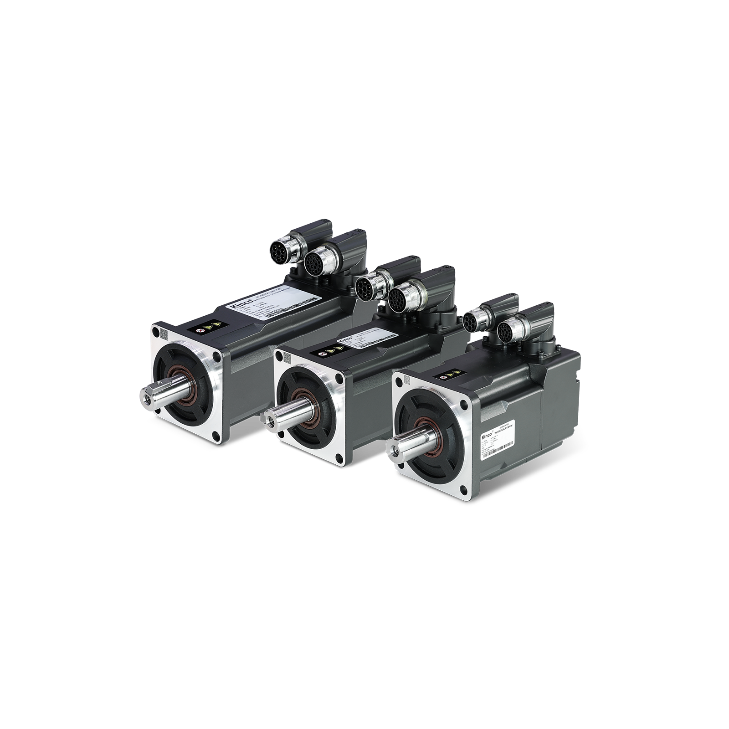
When comparing OEM and ODM sourcing models, machine builders should first assess whether an existing motor platform meets their technical requirements. Kinco‘s SMH series AC servo motors cover power ratings from 50 W to 7.5 kW and feature low cogging torque, low temperature rise, and multiple encoder options. The series is suitable for applications such as slitting machines, engraving equipment, and laser cutters. For projects requiring specific mounting dimensions, feedback configurations, or other modifications, these requirements should be clearly defined before production begins.
The choice between standard motor configurations and customized designs ultimately depends on the project’s engineering scope, production volume, and intellectual property requirements. Defining design responsibilities, testing procedures, and ownership arrangements in advance helps manufacturers establish a more practical sourcing strategy.
Strategic Sourcing for Long-Term Production Scalability
Building a resilient motion control strategy requires selecting a manufacturing partner capable of supporting your business throughout every stage of the product lifecycle. Whether choosing standard catalog products, modified ODM hardware, or fully custom OEM motor designs, maintaining consistent quality standards across production batches remains essential.
Evaluating supplier quality certifications, testing protocols, and global supply chain support helps mitigate unforeseen operational disruptions. Flexible manufacturing partners adapt to shifting production volumes, supporting smooth transitions from initial prototyping phases to high-volume commercial manufacturing.
Ultimately, aligning your sourcing strategy with clear enterprise goals enables your engineering team to deliver reliable, high-performance machinery to competitive industrial markets. Partnering with experienced automation specialists provides the technical foundation needed to build scalable, future-ready motion systems.
