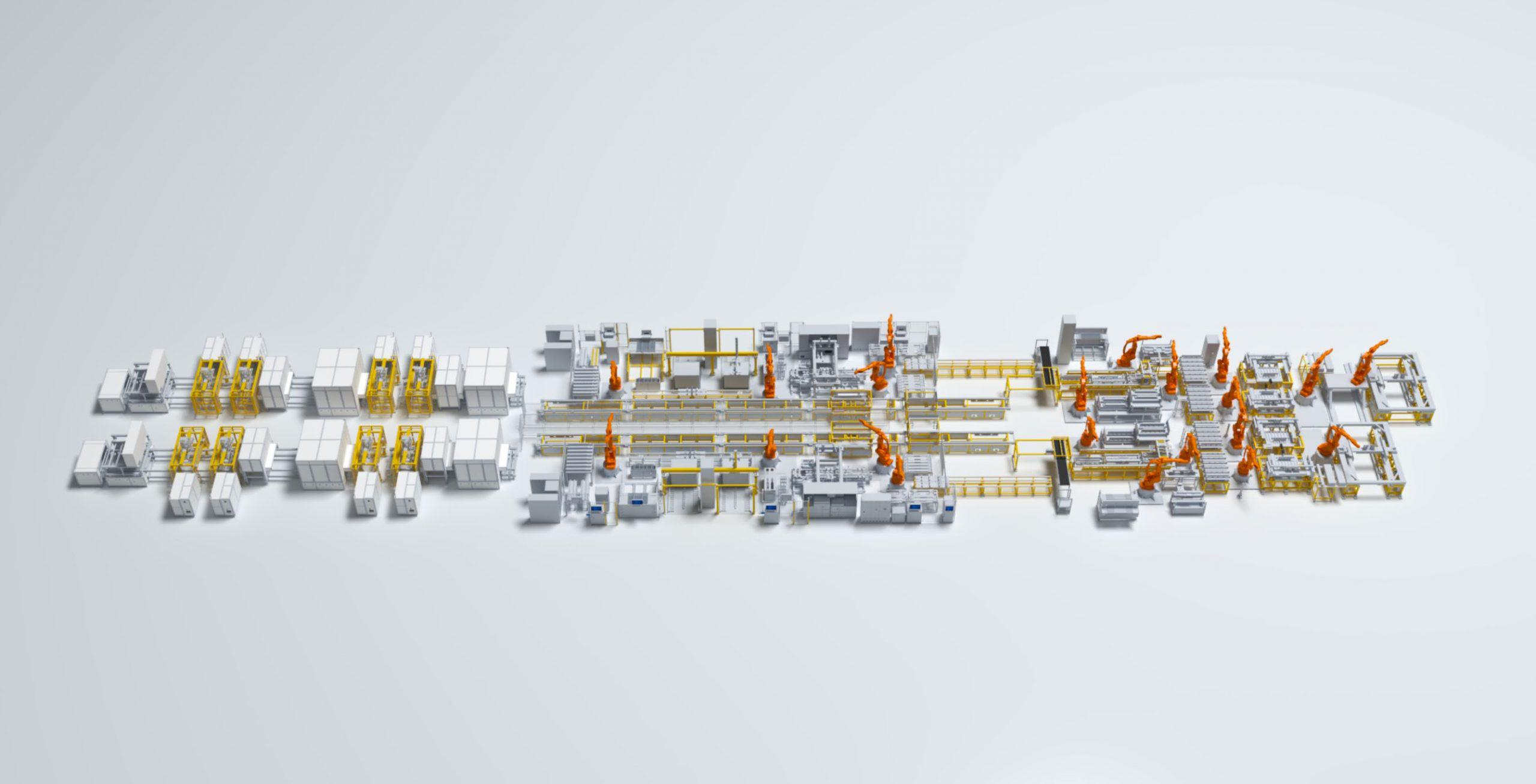
As electric vehicle production expands, battery manufacturers face increasing pressure to improve production efficiency, maintain consistent quality, and control manufacturing costs. While battery performance often receives the most attention during product development, the design of a battery pack also has a direct impact on how easily it can be manufactured. A pack with complex structures, difficult connection points, or inconsistent component positioning can create unnecessary assembly steps and slow down production.
The cheapest time to fix an assembly problem is in the pack design, before fixtures and stations are built around it. The right combination of product architecture and automated manufacturing equipment can help create a more stable, repeatable production process.
Consider Assembly Requirements During Battery Pack Design
An EV battery pack consists of multiple components, including battery cells, structural supports, electrical connections, cooling systems, and protective enclosures. These components must be accurately positioned and securely assembled to meet performance and safety requirements.
However, a design that works well on paper may present challenges on the production floor. Limited access for automated equipment, complicated fastening procedures, and inconsistent component dimensions can increase assembly time and create quality risks.
Manufacturers should therefore evaluate several factors during the design stage:
- Component standardization: Consistent dimensions and connection interfaces make automated handling and assembly easier.
- Structural accessibility: Assembly stations need sufficient space for robots, inspection equipment, and fastening tools.
- Process compatibility: Adhesive application, module positioning, welding, and other operations should follow a logical production sequence.
- Inspection requirements: Critical assembly points should be accessible for visual inspection and quality testing.
Considering these factors early can reduce unnecessary production adjustments and improve manufacturing consistency.
How EV Battery Pack Assembly Benefits from Automation
Manual assembly may be suitable for small production volumes, but it becomes increasingly difficult to maintain consistent cycle times and quality as output increases. Automated production lines help manufacturers manage repetitive operations with greater precision and coordination.
In modern EV battery pack assembly, automation can cover cell handling, spacing adjustment, barcode scanning, testing, adhesive application, module stacking, and pack integration. Robots can perform repetitive positioning and handling tasks, while automated inspection systems help identify defects before products move to subsequent stations.
For example, cell scanning and OCV (open-circuit voltage) testing allow manufacturers to check incoming cells before assembly. Identifying defective cells at an early stage helps prevent unsuitable components from entering later production processes.
Automation also improves process repeatability. When positioning, adhesive application, and module loading follow controlled procedures, manufacturers can reduce variations caused by manual operations. This is particularly important when producing multiple battery models or increasing production capacity.
Flexible Production Lines Support Changing Battery Designs
Battery technology continues to evolve, with manufacturers developing different cell formats and pack architectures to meet vehicle performance and cost requirements. A production line designed for only one battery configuration may become difficult to adapt when product specifications change.
This makes production flexibility an important consideration when evaluating equipment investments.
A flexible line should support product changeovers, adjustable process settings, and coordinated material handling. Modular equipment configurations can also make it easier to adapt individual workstations without redesigning the entire production system.
Manufacturers evaluating battery pack assembly suppliers should ask whether their proposed solutions can accommodate different battery configurations, what changeover procedures are required, and how future production expansion can be supported.
Quality Control and Traceability Must Be Built into the Process
Assembly efficiency should not come at the expense of product quality. A battery pack contains interconnected electrical and structural components, so errors at individual stations can affect the reliability of the finished product.
An effective production system should integrate inspection and testing throughout the manufacturing process rather than relying exclusively on final inspection.
Relevant operations may include barcode identification, cell voltage testing, adhesive inspection, welding checks, insulation testing, and end-of-line testing. Production data can also help manufacturers identify recurring defects and investigate process deviations.
Manufacturing execution systems (MES) provide another important layer of process management. By recording production information and tracking products through different stations, an MES can improve traceability and support more informed production decisions.
How FHS Supports Automated Battery Pack Manufacturing
Translating these design-for-assembly principles into reliable production calls for well-matched automation equipment.As a supplier of intelligent manufacturing automation equipment, FHS provides battery module and pack production line solutions for new energy manufacturers. Its product range covers CTP, blade battery, and CTC configurations, addressing different manufacturing processes and production requirements.
One example is its CTP Module Pack Line, designed to automate battery module and pack assembly. The line integrates cell handling, spacing adjustment, barcode scanning, OCV testing, defective-cell replacement, adhesive application, and module stacking. Its pack section also incorporates AGV flexible logistics, automatic gluing, visual inspection, module loading, pressurization, and upper-cover fastening.
According to the official product specifications, the line has a module capacity of 15 seconds per beam and a pack cycle time of 300 seconds per pack. Its stated product excellence rate is 99%, while the equipment failure rate is below 0.4%.
The line also features flexible production configurations and robotic automation for key assembly operations. Its upright module placement process avoids flipping the uncured pack after placement, helping improve assembly stability.
These capabilities make the solution relevant to manufacturers seeking to coordinate multiple production stages within an automated CTP manufacturing system.
Make Assembly Efficiency Part of the Design Strategy
An efficiently assembled EV battery pack is the result of coordinated product engineering, manufacturing processes, and automation planning. Manufacturers should evaluate not only battery performance but also component accessibility, process sequence, production flexibility, and quality traceability.
By addressing these considerations early and working with experienced automation partners, battery producers can build production systems that better support consistent output and future manufacturing demands. For companies investing in next-generation battery production, assembly efficiency is not simply an equipment consideration; it is an important part of long-term manufacturing competitiveness.
