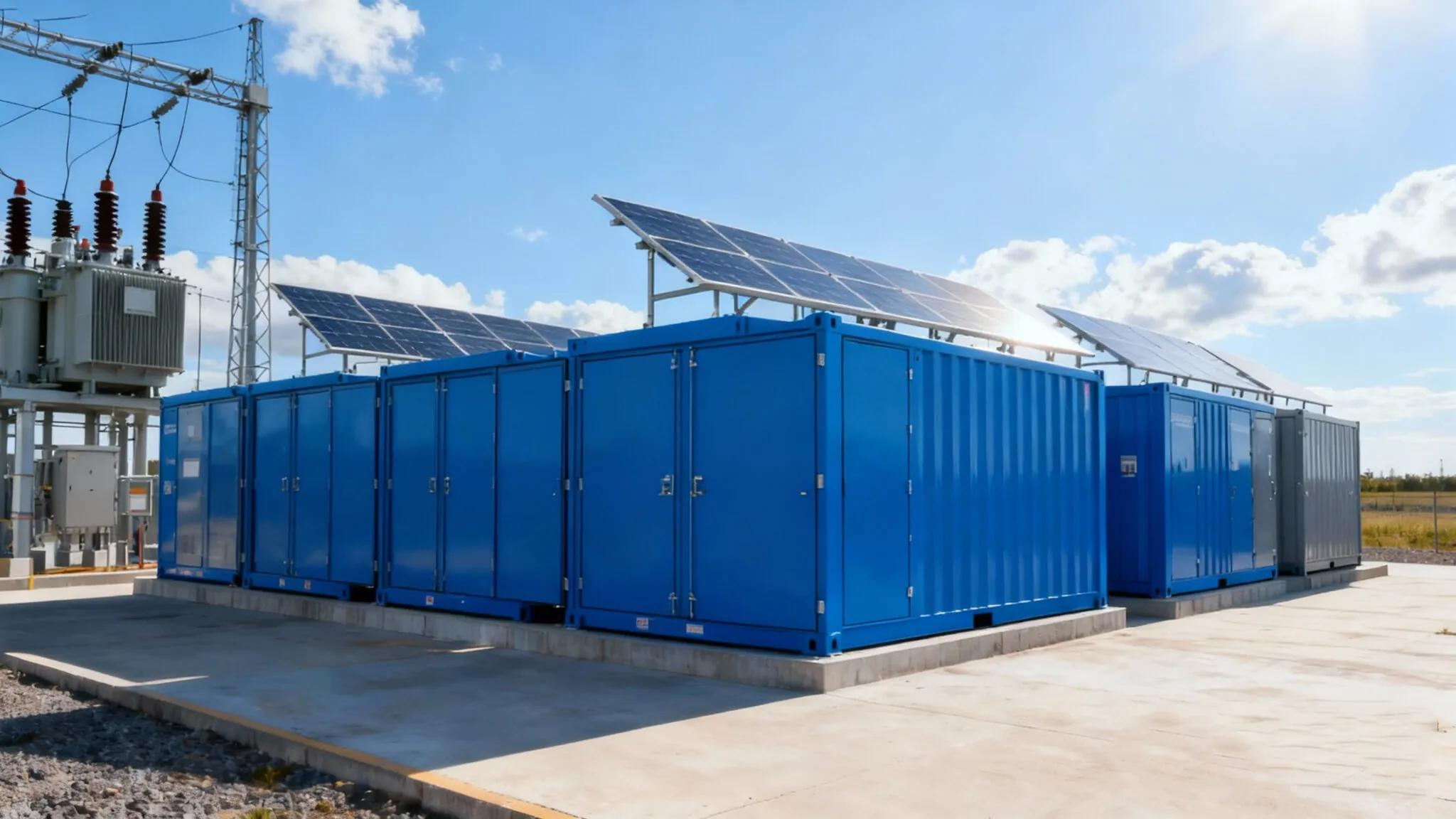
Evaluating potential vendor partnerships requires a thorough technical audit when securing core power electronics for commercial and industrial energy storage installations. System integrators and project developers need robust modular conversion hardware capable of handling demanding grid conditions, peak shaving routines, and complex microgrid deployments. Working alongside an experienced power conversion system manufacturer allows engineering teams to streamline hardware integration, accelerate project execution schedules, and maintain high system reliability across global energy markets.
Technical Expertise in Power Electronics Hardware Manufacturing
Selecting a reliable equipment partner involves verifying the vendor’s core research capabilities, manufacturing depth, and power electronics design background. Advanced conversion hardware requires precise thermal management, high power density, and sophisticated firmware controls for bidirectional power conversion. System integrators must evaluate whether a hardware supplier develops modular units supporting essential operating modes, including Active Power / Reactive Power Control (PQ), Voltage / Frequency Control (VF), and Virtual Synchronous Generator (VSG) topologies.
A qualified manufacturing partner should also provide versatile cooling configurations and modular scaling flexibility to accommodate diverse site constraints. Modular Power Conversion System (PCS) product matrices, such as YUNT’s Mars series, cover power ratings from 30 kW to 225 kW using compact 3U rack-mountable architecture. Offering both air-cooled and liquid-cooled 125 kW PCS units allows developers to tailor thermal dissipation strategies based on local environmental conditions. When paired with high-efficiency Maximum Power Point Tracking (MPPT) and bidirectional DC-DC converters—such as the Mercury series operating between 40 kW and 60 kW with peak conversion efficiencies reaching up to 99%—engineering teams can build adaptable direct current or alternating current coupled energy storage architectures.
Global Grid Compliance and System Architecture Adaptability
Sourcing core hardware from a modern power conversion system factory requires strict adherence to regional grid connection codes and environmental safety standards. Procurement teams should prioritize equipment suppliers whose modular product portfolios carry comprehensive international certifications. Essential compliance benchmarks include European Union CE markings, Germany VDE standards, TÜV, and SGS certifications, alongside specific grid connection approvals such as United Kingdom G99 and Spain RD217002 regulations.
Multi-energy integration projects frequently require microgrid energy cabinets capable of coordinating multiple generation sources simultaneously. Integrated microgrid systems, such as the YUNT’s Neptune series scaling from 125 kW up to 1000 kW power ratings, combine bidirectional inverter modules, MPPT solar controllers, and Static Transfer Switch (STS) units within IP20 or IP54 enclosures. Incorporating a built-in STS enables rapid transfer speeds under 10 milliseconds during utility power disruptions, protecting sensitive commercial automation equipment and critical industrial manufacturing lines against severe voltage sags.
Addressing Operational Risks in Commercial Storage Projects
Commercial and industrial facility developers face distinct operational challenges that directly influence long-term asset value. Traditional centralized inverter configurations introduce single-point failure risks where a single module fault forces the entire energy storage system offline. Modular hardware structures drastically lower this operational vulnerability through active fault isolation. If an individual 3U conversion module requires maintenance, adjacent modules continue operating, preserving partial capacity and maintaining facility power backup.
Multi-source energy integration presents additional control complexities when combining solar photovoltaic arrays, battery storage banks, and diesel generators on a single electrical bus. Utilizing bidirectional DC-DC controllers and microgrid energy routers simplifies power routing, helping circulating currents between parallel battery strings and extending total battery lifespan. Furthermore, selecting standardized hardware modules built with low-frequency isolation transformers ensures galvanic isolation, suppressing harmonic distortion and protecting industrial loads against transient grid spikes.
Engineering Workflow Efficiency and Customized Proposal Delivery
Project development timelines often suffer when hardware suppliers fail to provide timely engineering support during initial design phases. A responsive power equipment supplier streamlines collaboration through structured engineering workflows. Upon receiving project parameters regarding application scenarios, target power ratings, and local grid standards, technical teams carry out scenario analyses and deliver customized technical schemes within 72 hours. These tailored proposals specify product selections, electrical schematics, and adaptation plans, helping reduce engineering lead times and helping integrators finalize contract terms quickly.
On-site deployment efficiency is further enhanced when power hardware integrates with site-level control infrastructure. Standardizing communication interfaces using isolated RS485, Controller Area Network (CAN), and Ethernet protocols allows conversion modules to interface smoothly with third-party Energy Management System (EMS) platforms and Battery Management System (BMS) controllers. This open communication framework ensures fast commissioning while giving site operators comprehensive visibility over system operating metrics.
Long-Term Asset Optimization and Strategic Partnership Value
Sustained profitability over a long operational lifespan depends on proactive post-installation maintenance and remote management tools. Intelligent equipment monitoring platforms equipped with pre-fault diagnostic algorithms continuously track voltage, current, and operating temperatures across conversion hardware. Remote Over-The-Air (OTA) firmware upgrade capabilities allow facility managers to implement software enhancements and performance optimizations, potentially reducing the need for some on-site technician visits.
As global industrial sectors accelerate decarbonization initiatives, sourcing core conversion equipment from an established brand like YUNT provides commercial developers with reliable power conversion platforms. YUNT’s core team brings more than 16 years of experience in power electronics product development within the new energy industry, supported by high-density modular designs and relevant global compliance certifications.
