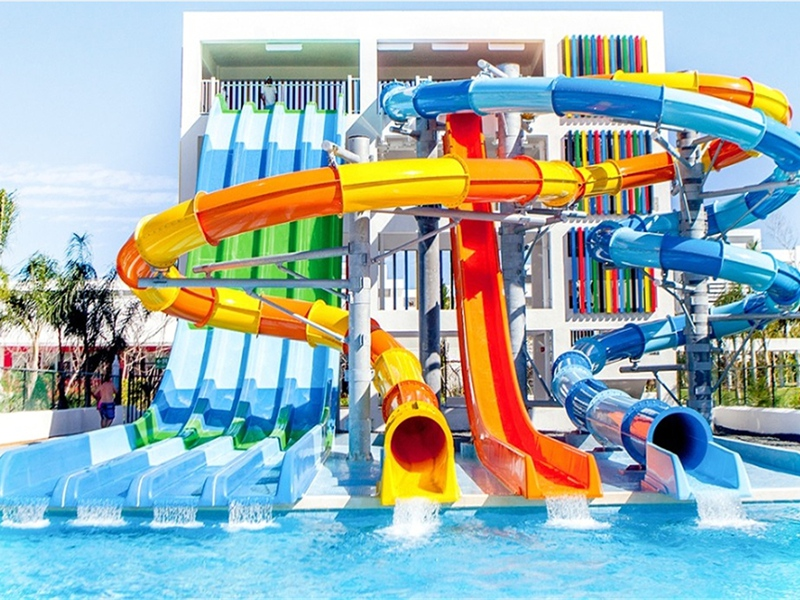
A swimming pool slide can look straightforward from the deck, yet its safe operation depends on the relationship between water depth, rider speed, landing geometry, and available stopping distance. Poor coordination among these factors may create collision risks, uncomfortable entries, or restrictions on how an attraction can be used.
Effective planning for commercial pool slides begins with understanding the entire rider path, from the slide exit to the point where the swimmer slows down and leaves the landing area. Industry guidance, manufacturer specifications, and applicable local codes all contribute to the design process. With experience in aquatic attraction projects, Jinchao approaches slide customization as one part of a broader facility layout in which circulation, supervision, and pool operation must work together.
How Water Depth Affects Slide Exit Safety
Water depth should be evaluated according to the slide’s exit configuration, expected rider speed, body position, and the pool floor profile. A deep pool does not automatically provide a safer landing: if the exit directs riders toward a shallow transition or a submerged obstruction, the risk remains. Conversely, a landing area designed for a particular slide may require a carefully controlled depth range rather than uniform depth throughout the entire pool. Designers should follow the attraction manufacturer’s specified depth and clearance requirements instead of relying on general assumptions.
The direction and angle of entry also influence how a rider interacts with the water. A steep exit may produce a different entry pattern from a flatter run-out, affecting both forward travel and the depth reached immediately after contact. Pool slopes, floor drains, steps, and changes in elevation deserve particular attention because riders may not be able to see these features while moving through the water. The design drawings should identify the full landing envelope, including underwater conditions, rather than showing only the visible pool surface.
Water depth must also be coordinated with the intended user group and operating rules. Restrictions related to age, height, swimming ability, or body position may affect how the attraction can be operated, but signage cannot compensate for unsuitable physical dimensions. A qualified designer should verify the required water depth against the selected slide specifications and relevant safety standards before construction begins.
Designing a Landing Zone Around Rider Movement
The landing zone is the area in which a rider enters the pool, loses momentum, and transitions out of the ride path. Its dimensions depend on the exit trajectory, expected speed, water conditions, and the space needed to prevent interference with other swimmers. A useful plan distinguishes the immediate splashdown area from the wider region required for deceleration and safe departure. Treating the exit point as the only critical location can leave insufficient room for the movement that follows.
Separation between arriving riders and people already using the pool is equally important. Recreational swimming lanes, stairs, pool ladders, play features, and other attractions should not intrude into the expected landing path. If several slides share a pool, each exit needs to be assessed individually, followed by a review of how the combined flows interact. Physical separation, barriers where appropriate, clear circulation routes, and active supervision can reduce conflicts that a layout might otherwise create.
A qualified pool slide company should provide project-specific drawings and technical requirements for review before the pool shell and surrounding deck are finalized. These documents should identify the exit position, landing dimensions, clearance distances, and any operating limitations. During design coordination, the architect, aquatic engineer, slide supplier, and pool contractor need to work from compatible plans. Changes to slide height, exit direction, or pool geometry should trigger a fresh review rather than being treated as minor adjustments.
Planning Run-Out Space, Circulation and Operations
Run-out planning extends beyond the point at which a rider reaches the water. It accounts for the distance needed to slow down, regain an upright position, and move away from the exit without obstructing the next rider. A layout with insufficient clearance can cause congestion even if the water depth meets the specification. Designers should assess the available space in both the direction of travel and the surrounding area, allowing for realistic rider movement rather than assuming everyone stops immediately.
Water movement can affect this process. Strong return currents, poorly positioned circulation outlets, or turbulence near the exit may influence how riders move after landing. Pool circulation should be coordinated with the attraction layout so that water treatment requirements are met without creating unnecessary interference with the landing area. Drain covers, suction outlets, and other submerged fittings must also comply with applicable safety requirements and remain appropriately positioned relative to the attraction’s operating zone.
For resorts and public aquatic facilities, a practical layout must accommodate both peak visitor demand and routine supervision. A customized example from Jinchao’s commercial swimming pool slide range illustrates why project details matter: slide height, exit geometry, capacity, and pool dimensions need to be considered together, with specifications confirmed for the selected configuration. The attraction should not be assessed by appearance or nominal throughput alone. Operators also need sightlines for lifeguards, access for emergency response, clear entry and exit procedures, and a maintenance plan for inspecting the slide and its landing environment.
Conclusion
Safe slide planning is ultimately a coordinated engineering task rather than a matter of allocating a patch of water at the end of a flume. Water depth addresses the entry conditions, landing-zone design manages the immediate interaction between rider and pool, and run-out space supports deceleration and orderly movement afterward. Each element depends on the selected attraction, site constraints, applicable regulations, and the way the facility will operate.
Before construction, project teams should verify dimensions against manufacturer documentation, obtain the necessary professional reviews, and confirm local code requirements with the relevant authorities. Clear operating procedures and post-installation testing provide an additional opportunity to identify problems before public use begins. For developers evaluating commercial swimming pool slides, Jinchao offers project customization that can be considered alongside engineering review, pool planning, and operational needs.
