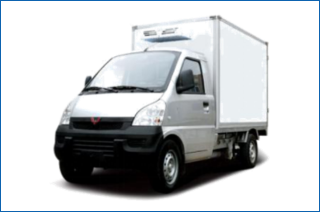
Carbon reduction in freight transport depends on vehicle energy use, route conditions, cargo utilization, charging practices, and overall fleet operation. Route length, cargo utilization, traffic conditions, charging patterns, and vehicle downtime all shape the environmental profile of commercial operations. This makes the design of a container truck increasingly relevant to businesses seeking practical ways to reduce emissions without disrupting established logistics routines. Wuling Motors brings more than 30 years of vehicle manufacturing experience across traditional and new-energy vehicles, offering useful industry context for examining how electrification can influence freight operations.
Understanding Where Freight Emissions Come From
Fuel consumption is only one part of the operational footprint generated by road freight. Repeated acceleration, prolonged idling, unnecessary empty mileage, and inefficient loading can all increase energy use during routine transportation.
Route characteristics deserve particular attention because two vehicles covering the same distance may consume very different amounts of energy. Congested urban roads, frequent stops, steep gradients, and heavy payloads can alter the efficiency of a delivery cycle. Fleet analysis therefore needs to examine actual operating patterns rather than relying solely on nominal vehicle figures.
Cargo utilization creates another important variable. Poorly planned loads can result in additional journeys, while excessive vehicle capacity may mean that energy is spent moving unused space. Matching body configuration with the type and frequency of freight can therefore contribute to lower resource consumption.
Why Electrification Can Change Daily Energy Use
Electric drivetrains convert stored electrical energy into motion without tailpipe exhaust during vehicle operation. This characteristic can be particularly relevant to urban freight routes where vehicles repeatedly stop and accelerate.
Energy recovery during deceleration provides another technical difference. Regenerative braking can return part of the vehicle’s kinetic energy to the battery, although the amount recovered depends on driving conditions, vehicle load, terrain, and control strategy. Such features make operating behavior an important part of electric-fleet efficiency.
Charging strategy also affects the practical outcome. Depot-based operations with predictable schedules may allow vehicles to charge during planned idle periods. Renewable electricity can further change the overall emissions profile, although the actual result depends on the electricity mix used to supply the vehicle.
Vehicle Design Still Matters
Electrification does not make vehicle configuration irrelevant. Cargo dimensions, payload, chassis characteristics, body structure, and aerodynamic considerations continue to influence how much energy is required for each trip.
Wuling’s official specialized-vehicle portfolio provides a useful example of this diversity. The company lists several RongguangXinKa configurations, including double-row double-decker, single-row double-decker, double-row single-layer, and single-row single-layer container trucks. The same portfolio also includes logistics vehicles, vending vehicles, and other specialized commercial formats, illustrating how body configuration can be adapted to different transport tasks.
This distinction matters because freight operators rarely have identical requirements. A special purpose vehicle designed around a defined application may use its available energy and cargo capacity differently from a general-purpose platform. Matching the structure to the job can therefore support more efficient resource use.
Measuring Carbon Reduction Across The Fleet
Fleet operators need consistent metrics to understand whether electrification is producing meaningful changes. Energy consumed per kilometer, energy used per delivery, annual mileage, payload utilization, and charging behavior can provide a more useful picture than vehicle count alone.
Operational data can also reveal where improvements remain possible. Frequent empty returns, inefficient routes, or charging during periods of high vehicle demand may offset some of the expected benefits. Digital fleet-management systems can help identify these patterns and support better scheduling decisions.
Maintenance should not be overlooked. Battery condition, electrical components, tires, and other vehicle systems influence efficiency throughout the service period. Regular technical assessment helps fleet managers understand whether declining efficiency comes from vehicle condition, route changes, payload variation, or driving behavior.
Creating A More Efficient Freight Strategy
Carbon reduction becomes more practical when vehicle technology is combined with operational planning. Consolidating compatible deliveries, increasing useful cargo utilization, reducing unnecessary mileage, and assigning vehicles according to route requirements can lower energy demand before the powertrain is even considered.
Infrastructure planning forms another part of the equation. Charging capacity, electricity availability, parking arrangements, and vehicle departure times need to work together. Poor coordination can create operational bottlenecks even when the vehicle itself is technically suitable.
The wider development of special purpose vehicle technology may also support more targeted electrification. Refrigerated transport, municipal services, mobile retail, and logistics each impose different demands, so specialized body structures can influence how effectively an electric platform performs its intended task.
What New Energy Freight Fleets Need Next
The future of lower-carbon freight will depend on several variables developing together rather than on battery technology alone. Vehicle architecture, charging infrastructure, route analytics, cargo management, and electricity sourcing all contribute to the final environmental result.
Such changes also create new priorities for manufacturers. Container truck development increasingly involves balancing usable cargo space with energy consumption, while digital systems can provide operators with better information about how vehicles perform in real conditions. The goal is not simply to increase electrification, but to make each vehicle more closely aligned with its operating environment.
For fleet buyers, that perspective offers a more useful basis for comparing commercial options. Energy consumption should be considered alongside payload, body design, route requirements, charging access, and lifecycle service needs. These factors can reveal whether an electric platform is genuinely suitable for a particular logistics network.
Toward Smarter Low-Carbon Freight
No single technology can determine the carbon footprint of an entire logistics operation. Vehicle choice interacts with driving patterns, cargo planning, infrastructure, maintenance, and electricity sources, making the transition to lower-emission freight an operational as well as an engineering challenge.
The role of special purpose vehicle development is likely to become more significant as businesses seek transport equipment tailored to increasingly specific applications. Better alignment between vehicle structure and daily workload can help avoid wasted capacity while supporting more efficient use of energy.
Wuling Motors‘ combination of traditional and new-energy vehicle manufacturing provides a relevant reference for this broader transition. Its official portfolio demonstrates that commercial transport encompasses multiple vehicle formats and applications, rather than one standardized solution.
Looking ahead, container truck electrification will be most meaningful when paired with sound fleet planning and measurable operational improvements. That combination can turn lower-emission vehicle technology into a practical component of a more resource-conscious freight system.
