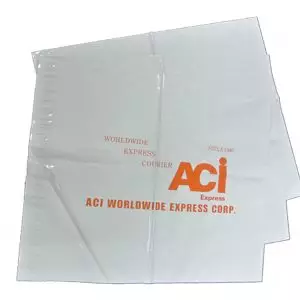
Among apparel shipments, lightweight printed poly mailers are usually the best fit when they match the folded garment, provide enough opacity for privacy, and use a dependable adhesive closure. Return handling matters as well, so the final construction should be checked with the actual product rather than selected from size labels alone.
When a mailer becomes part of the customer experience, printed shipping bags have to combine protection with consistent print quality. The final specification should record the agreed requirements so they can be checked during sampling and production.
A practical apparel-mailer specification should begin with five variables: folded dimensions, clearance, opacity, closure, and print area. Together they influence packing speed, movement inside the parcel, privacy, and the space available for labels or artwork. This product-focused check is more useful for apparel than a generic supplier-management checklist.
Matching the Mailer to the Garment
Because soft garments are non-fragile but still vulnerable to moisture, abrasion, and unwanted visibility, fit and film performance deserve priority. Too much clearance allows movement, while an overly tight bag concentrates stress at folds and corners. A sample made to the intended production specifications can reveal both problems before the size is finalized.
The final apparel-mailer specification should reflect how fit, closure, and film performance affect protection, packing speed, presentation, and return risk. Testing the actual folded garment can reveal trapped air, corner pressure, closure access, and label placement that size labels alone cannot show.
WH Packing‘s apparel-mailer capability can be judged through the options that matter to this use case: custom dimensions, printed graphics, film construction, and closure design. A trial made to the intended specification gives the buyer a practical basis for checking fit, opacity, seal behavior, and artwork position before volume production.
Film gauge should be interpreted together with resin formulation and relevant strength tests when an apparel mailer is selected. Changing a logo or print area may require additional setup work even when the physical bag size stays the same.
Incoming checks can concentrate on dimensions, gauge, seals, closure, print, odor, count, and visual defects rather than repeating every development test. Quality control for garment shipping becomes more consistent when the print specification is defined. Artwork approval should identify colors, registration, printable areas, barcode quality, and the reference sample used for later batches.
Protection, Privacy, and Packing Efficiency
A realistic packing trial reveals details that a catalogue cannot show, including trapped air, corner pressure, label placement, and access to the adhesive strip. For apparel, these observations help determine whether the mailer is easy to load, compact enough for distribution, and suitable for a possible return process.
When recycled materials are used, variation in recycled feedstock or color masterbatch can influence appearance, so tolerance samples are more reliable than verbal color names. For apparel, the most relevant choices are lightweight mailers that protect non-fragile textiles from moisture and routine handling while avoiding unnecessary box volume.
A correct specification should also consider seam strength, puncture and tear resistance, film thickness, print coverage, label compatibility, and whether returns require a second adhesive strip or perforation. Apparel programs with several sizes or print versions should account for carton quantities, storage space, replenishment timing, and minimum runs during order planning.
Specifying a Reliable Apparel Shipping Bag
Film thickness, resin blend, bag dimensions, and seal geometry jointly determine puncture resistance and usable load. A suitable apparel mailer is one that protects the folded item and reproduces the approved appearance at the required order volume.
The relevant options include self-sealing poly mailers, tamper-evident mailers, and logo-printed designs for clothing and garment shipments. Mailer suppliers can be compared against these requirements: Opacity and surface finish affect privacy, barcode readability, and the visual contrast of printed artwork.
Rub, tape, and light-exposure tests answer different questions and should not be treated as interchangeable. Buyers can match bag dimensions to folded garment size, select opacity for privacy, choose adhesive closure and tamper features, and specify printing for brand presentation.
When printed shipping bags are reordered, the approved dimensions, film, closure, and print reference provide the most useful comparison point. Gravure printing can reproduce branded graphics across bulk runs, but later lots should still be checked against the same construction and artwork standard used for the original apparel program.
Clear garment shipping specifications avoid ambiguity by recording the accepted sample and key quality requirements for subsequent production runs. For apparel shippers, the best bag is the one that protects the folded item, supports fast packing, preserves privacy, and performs consistently during routine handling.
Once the construction has been approved, WH Packing and the buyer can use the agreed sample and acceptance criteria to verify future production batches. That record also provides a consistent reference for checking apparel fit, privacy, closure performance, and print quality in future batches.
