Condensation can turn two rooms that handle the same gas into different purchasing problems. In one, the detector sits in a dry equipment bay. In the other, moisture forms on cold surfaces when humid air returns after a shutdown. The enclosure of an industrial gas detector needs to suit the conditions at the point where it will actually operate.
Three questions shape the comparison. What can enter or attack the enclosure, what approval does the location require, and can the specified unit be fitted and serviced there? A short schedule of conditions for each location lets the plant screen housings and then evaluate the complete configuration it intends to order.
Record the Conditions at the Mounting Point
Temperature extremes, relative humidity, and expected contact with dust or liquid belong at the top of the location schedule. The values should describe the air and surfaces around the proposed mounting point. A warm production area, for example, can still contain a cold wall or pipe where condensation forms during a change in operating conditions.
Water exposure should also be described. An occasional splash and repeated cleaning with a directed jet present different demands. For deposits from a powder-handling process, the schedule can identify where material settles and how it is removed. Listing the cleaning fluid separately gives the supplier a specific substance against which to review enclosure and seal compatibility.
Operating limits from the gas detector manufacturer give procurement a basis for screening those conditions. An upper humidity value expressed for noncondensing air still leaves condensation to be addressed in the location review. Two separate entries on the schedule can capture when moisture is likely to form and how technicians will reach the unit to inspect it.
Read Ingress and Hazard Markings as Separate Checks
Ingress protection describes the enclosure’s resistance to the entry of solids and water under specified tests. Hazardous-area markings address the equipment’s use in a specified explosive atmosphere. A plant assessing an industrial gas detector needs both lines of evidence where exposure to dust or water coincides with an area classification.
The IP66 rating on the catalytic configuration of the Bosean GT-K90 addresses two entries on that schedule. The digits indicate dust-tight construction and protection against powerful water jets under the rating tests. A separate operating specification gives a temperature range of −40 to 70 °C and specifies noncondensing conditions below 93% relative humidity.
For the same configuration, the gas marking is Ex db IIC T6 Gb, and the dust marking is Ex tb IIIC T80C Db. Each applies to a different atmosphere and needs to be compared with the site’s requirements and the approval documentation for the unit ordered. The review can record the gas and dust markings in separate fields.
Check the Housing, Entries, and Service Space
Looking at the cable entry and sensing connection can expose omissions in the location schedule. The body of an industrial gas detector may fit within the proposed footprint while a fitting needs more room or the sensing end becomes hard to reach. The installation drawing can show the space taken by both the detector and its connections.
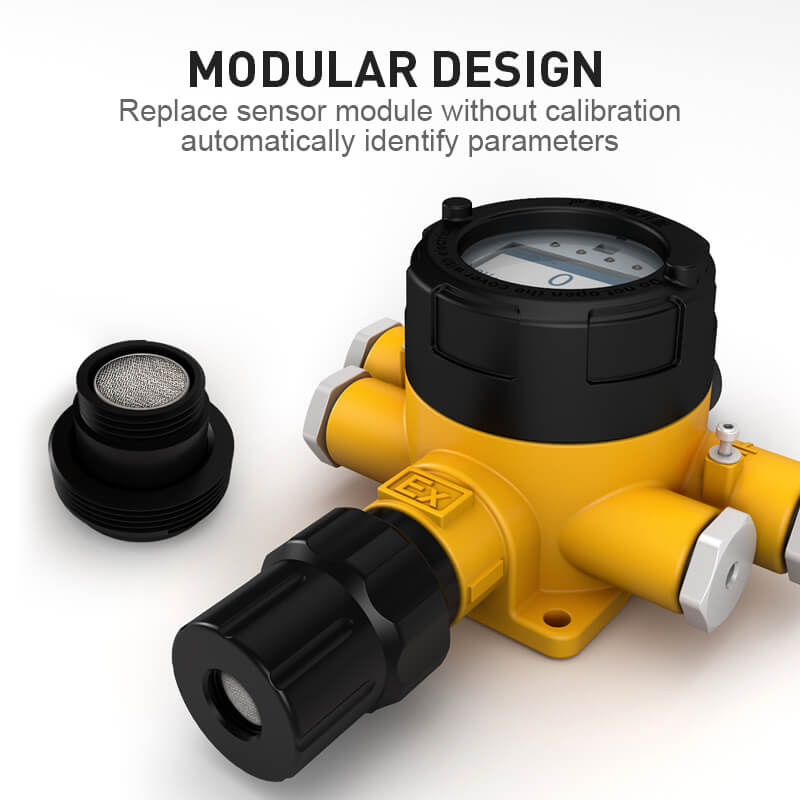
Among the Bosean options, the K-G60 has a die-cast aluminum enclosure with a wall-mount arrangement and a downward-facing sensing head. The stainless-steel BH-60 represents a different housing choice, with wall, pipeline, and flow-through arrangements listed according to the application. The selected arrangement determines where the sensing connection, cable, and service clearances need to be shown.
For material selection, the process exposure matters down to the seals and fittings. A stainless-steel housing identifies the enclosure material, while compatibility with a specific cleaning chemical or process residue still depends on the materials in contact with it. A drawing and configuration details from the gas detector manufacturer can establish which parts need that review.
Access also has to survive the plant’s layout changes between design and installation. The quotation can identify the orientation and specify how much room is needed to open the housing or reach its test connection. Checking both on a mounting drawing gives installation and maintenance staff the same view of the proposed arrangement.
Match the Delivered Assembly to the Order
One configuration entry can tie the selected Bosean model and variant to its enclosure material, markings, and cable fittings. Approval records from the gas detector manufacturer need to cover the unit in that entry. At delivery, comparing the actual nameplate and parts with the entry can reveal a substituted cable gland or a change to the housing before mounting.
During maintenance, an inspection may disturb a cover seal or a cable fitting. The maintenance plan needs the corresponding parts and instructions for the installed unit, including any requirements for restoring the enclosure after it has been opened. Keeping these details with the equipment record lets service staff identify the specified parts before they start work.
Procurement can use the location schedule and configuration entry as a paired checklist. That puts each operating limit, marking, and service clearance beside the condition it addresses and makes missing information visible before an order is placed. The order can then identify an assembled unit whose housing, entries, and service access match the conditions at the mounting point.
SEO Title: Industrial Gas Detector Enclosures: What to Check
Meta Description: Match an industrial gas detector enclosure to plant conditions by checking ingress protection, hazard markings, cable entries and service access.
